Materials and manufacturing
What a product is made of matters as much as what is printed on it.
Nothing taken on trust
Each material does a different job
LPR carries the printed security data over a five-year life; LAB does the same job where plates are replaced annually. VIPOL®, polypropylene and polycarbonate protect them. Recycled polycarbonate forms the platforms that carry the plate. None of it is taken on trust: our core materials were tested by an independent ISO/IEC 17025 accredited test centre.
1,000
Hours of continuous xenon arc UV with 70°C heat and moisture cycling, to SAE J2527.
4-5
ISO Grey Scale, for white and clear VIPOL® and for LPR. The top of the scale - effectively no fading.
3
Protective shields tested, not one. Same batch, same laboratory, same standard, so the comparison means something.
VIPOL® - the plate material
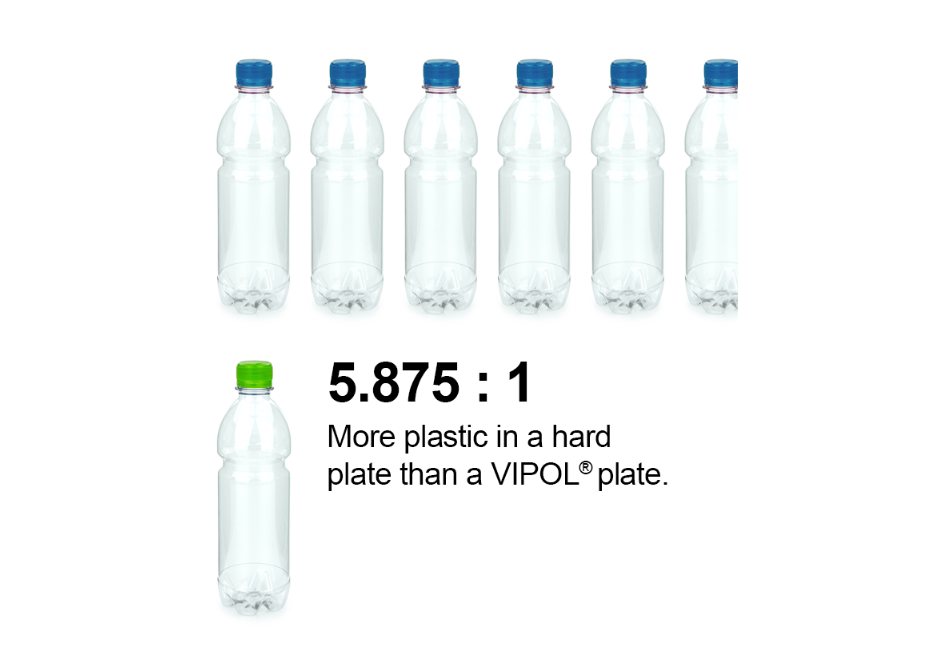
Our own PVC-free polymer, made from recovered industrial plastic waste. It does two jobs: a rigid white sheet that is the whole five-year plate, or a clear flexible laminate that seals printed data beneath a waterproof shield.
After the full thousand hours, white and clear VIPOL® scored 4–5 on the ISO Grey Scale.
TESTED FORa five-year service life
LAB - the cellulose option
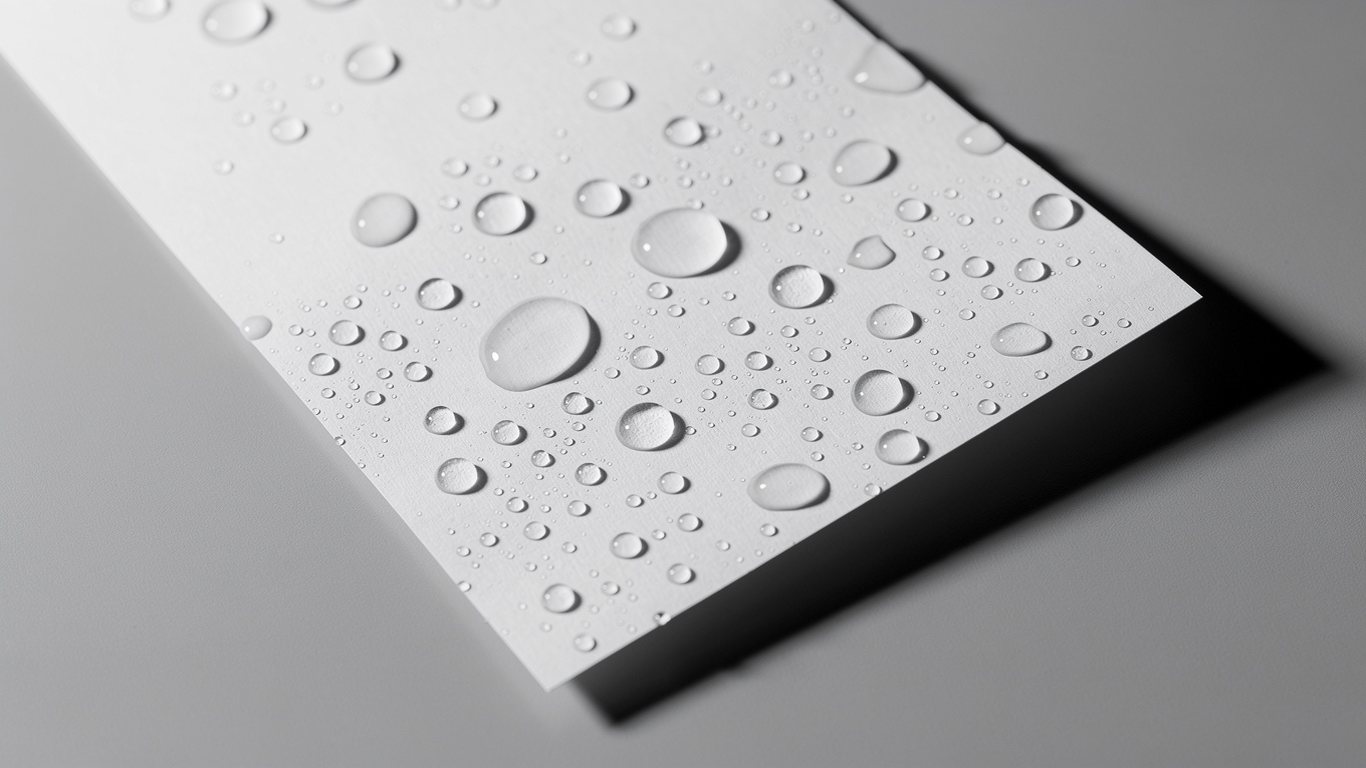
Low Absorption Barrier is a cellulose-based, water-resistant substrate. Where VIPOL® is a polymer, LAB is paper at heart, which is what makes it shreddable on your own premises and acceptable to an ordinary paper waste stream.
Sealed beneath a VIPOL® protective shield it gives a printable, weatherproof plate with a cellulose core - the base material in the second of the two options we quote.
TESTED FORannually replaced plates
LPR - the security layer
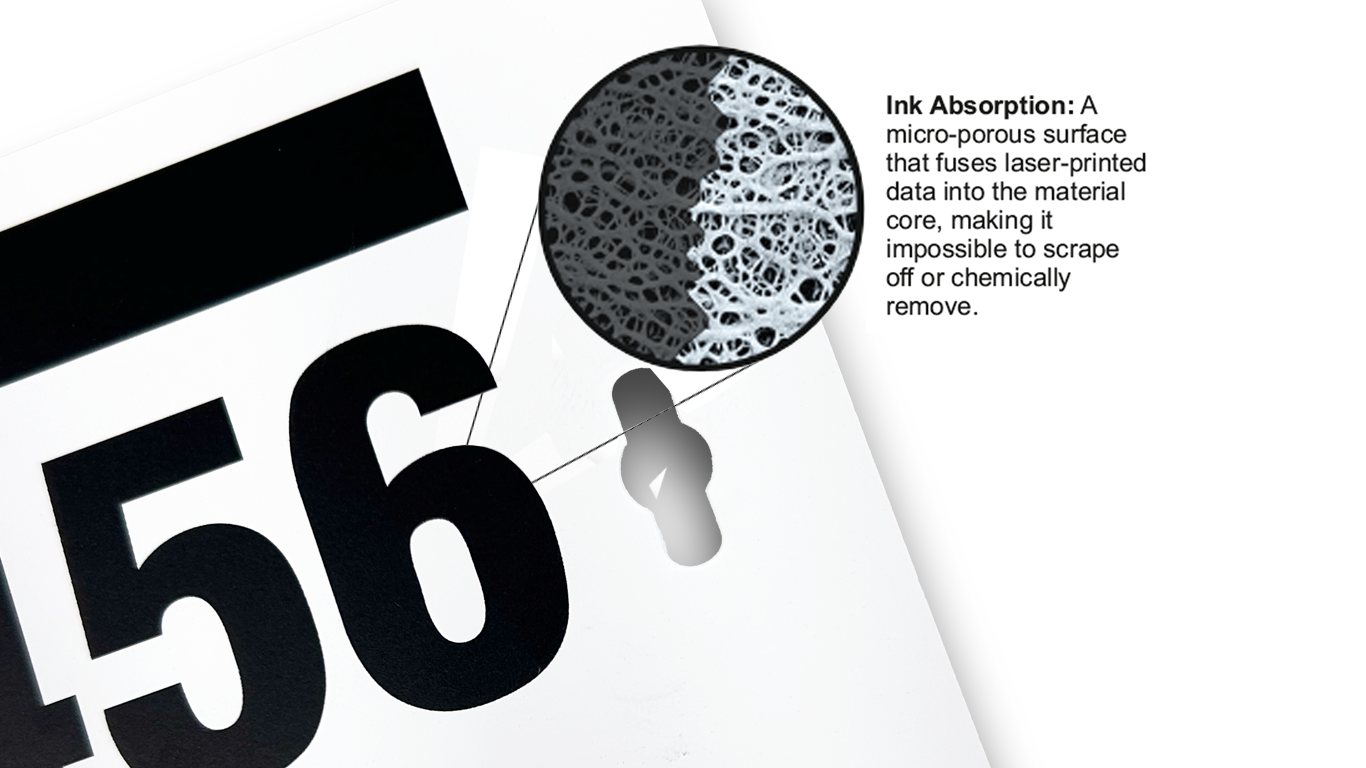
Laser Printable Rubber is where the data lives. Its microporous structure absorbs toner into the material itself, so licence information cannot be scraped, dissolved or abraded off.
Bonded beneath a VIPOL® protective shield, any attempt to separate the layers permanently distorts it - immediate evidence of tampering. Same test, same result: 4–5.
TESTED FORa five-year service life
Three protective shields
We test all three, not the flagship alone
The shield decides how many years a plate survives, so all three went through the same batch, the same laboratory and the same standard.
01
VIPOL®
Our PVC-free polymer, as clear laminate or rigid white sheet.
02
Polypropylene - Flexiplate
The flexible protective layer, for applications needing conformability.
03
Polycarbonate - hard plate
The rigid cover, for maximum physical robustness on exposed mountings.
Whichever fits your budget, you are choosing between three tested options - not one tested option and two guesses.
See the full results by material, including the one we now recommend against for five-year plates →Holograms, foils, fixings and platforms
Testing shapes our recommendations here too. Premium holograms beneath VIPOL® top-coats scored 4. Standard foils perform well for around a year, which is why we specify them for annual validation discs rather than long-cycle plates.
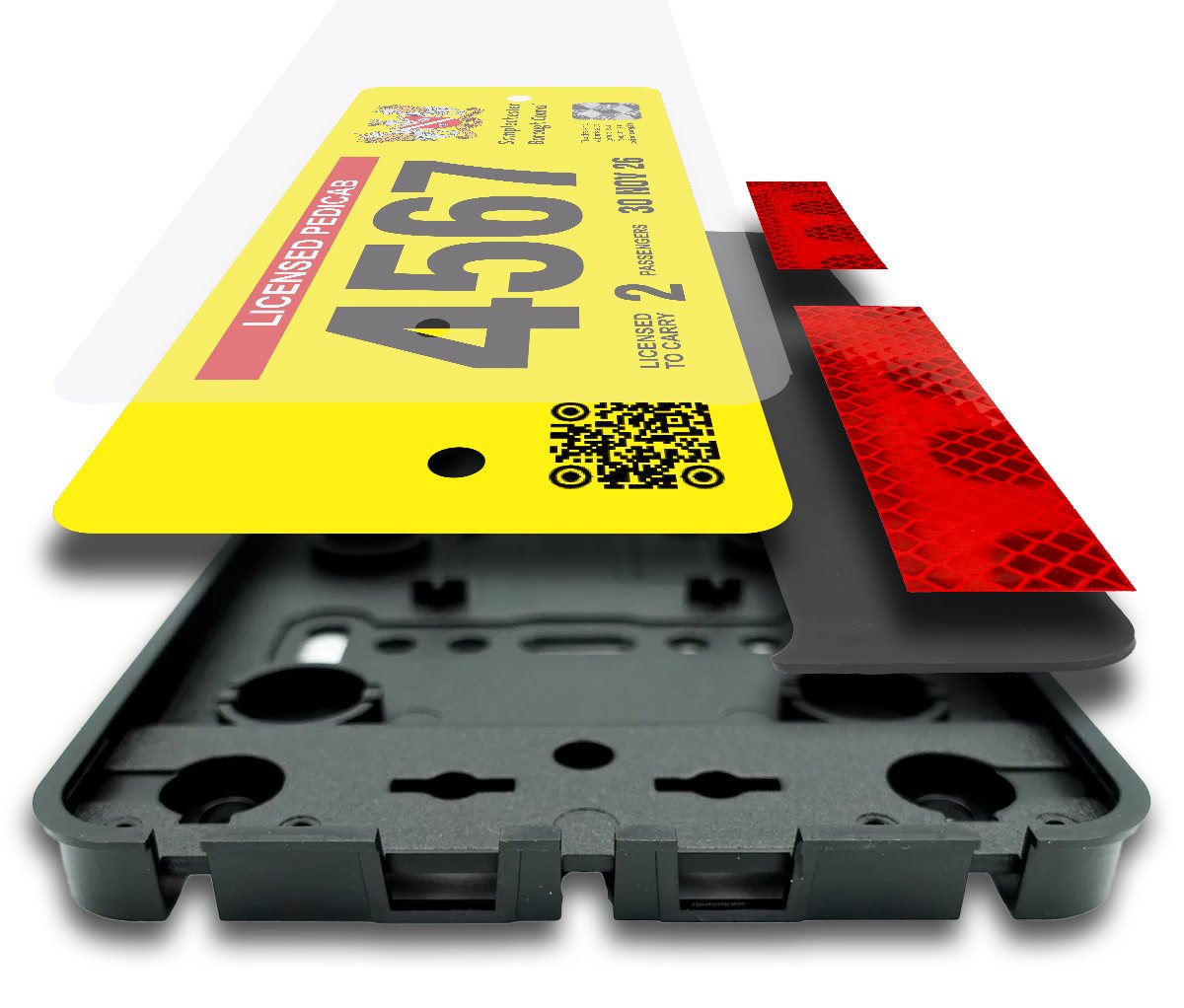
Platforms carry the plate on the vehicle and take the load the plate should not: a 100% recycled, 100% recyclable high-impact chassis, designed for heavy axle loads and a life in road salt and weather. It will not rot, and it holds its mounting points. At end of life platforms are recovered, cleaned and redeployed.
Platforms are drill-free. Magnets and hi-bond adhesive mount them without a hole in the bodywork, so a change of vehicle costs you a plate and not a repair.
Proven, not promised
Untested materials are a false economy. A plate that fades means replacements, disputes and identification an officer cannot verify. Everything is manufactured under our own supervision in the UK, and comes with laboratory evidence you can put in front of a procurement panel.
Model it at your fleet size.
Give us your vehicle numbers and renewal cycle and we will show you the plastic, the carbon and the cost over five years.
Model your fleet